

Scaling a sales team has a way of surfacing problems you didn’t know you had.
What felt intuitive at a handful of reps starts to wobble as volume, complexity, and expectations increase. Decisions stack faster. Signals get noisier. Small cracks travel quickly.
We’ll break down how to scale a sales team with intent – covering the systems, structure, and operating choices that separate controlled growth from costly drift.
Key Notes
- Sales teams scale effectively only after demand, unit economics, and repeatability are proven.
- The right sales model and segmentation prevent inefficiency as volume and deal complexity increase.
- Structure, process, and enablement must be locked in before adding headcount at scale.
Decide If You’re Really Ready To Scale
Many startups do this backwards.
They feel pressure. They raise seed. They ship a GA product.
A couple customers land. The CEO is exhausted.
So they hire sales and hope the engine builds itself.
Sometimes it works.
More often, it creates an expensive, demoralizing loop: high CAC, long cycles, heavy discounting, churn, then another “we need better reps” round.
👉 Scaling a sales team should be a response to demand and repeatability, not a belief statement.
The demand signals that justify hiring
You’re usually ready to add capacity when you see constraints, not just ambition:
- You’re missing revenue because you cannot respond fast enough. Leads sit. Follow-ups slip. Demos get pushed out.
- Pipeline consistently exceeds what your current team can work. Not a one-off spike. A trend.
- Your team is overloaded in a way that creates churn. Burnout is a demand signal, too.
Product-market fit checkpoints (what “repeatable” means)
You don’t need perfect PMF.
You do need real PMF.
That means your solution consistently solves a painful problem for a defined buyer. The proof shows up in retention, expansion, NPS, usage, referrals.
Things customers do when they’re not being pushed.
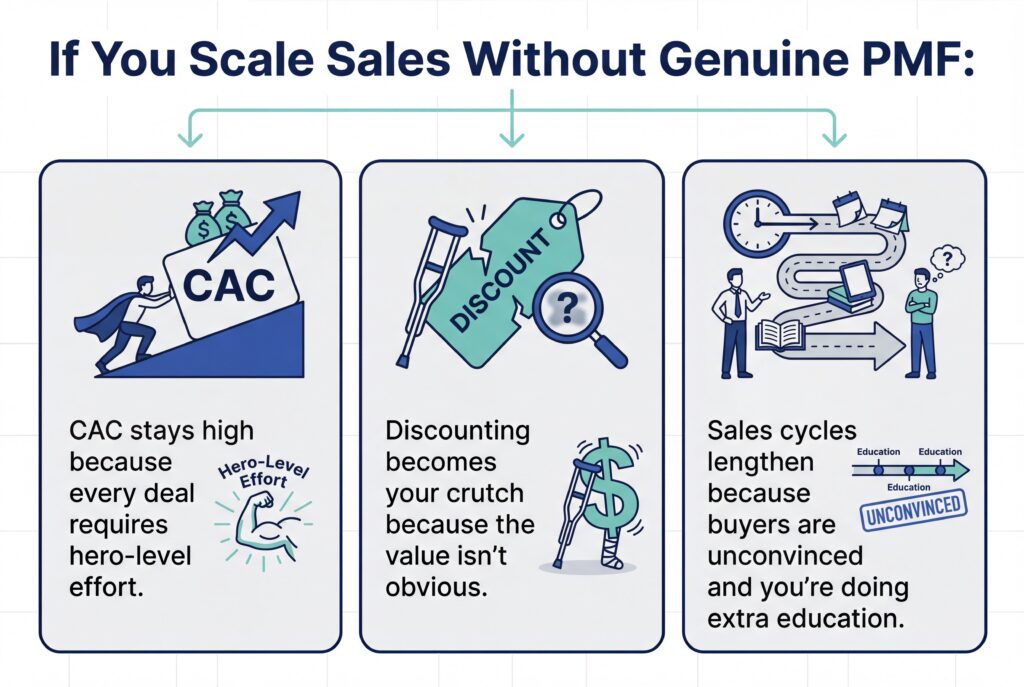
The red flag here is founder magic.
If your best win stories depend on you, your relationships, your ability to improvise on the fly, you don’t have a scalable sales motion yet. You have a charismatic founder-led motion.
Unit economics guardrails (so growth doesn’t bankrupt you)
A sales hire is not just OTE.
It’s fully loaded cost: base, variable, benefits, tools, management time, enablement, sales ops load, the opportunity cost of distraction.
Before you hire at scale, make sure the math isn’t screaming.
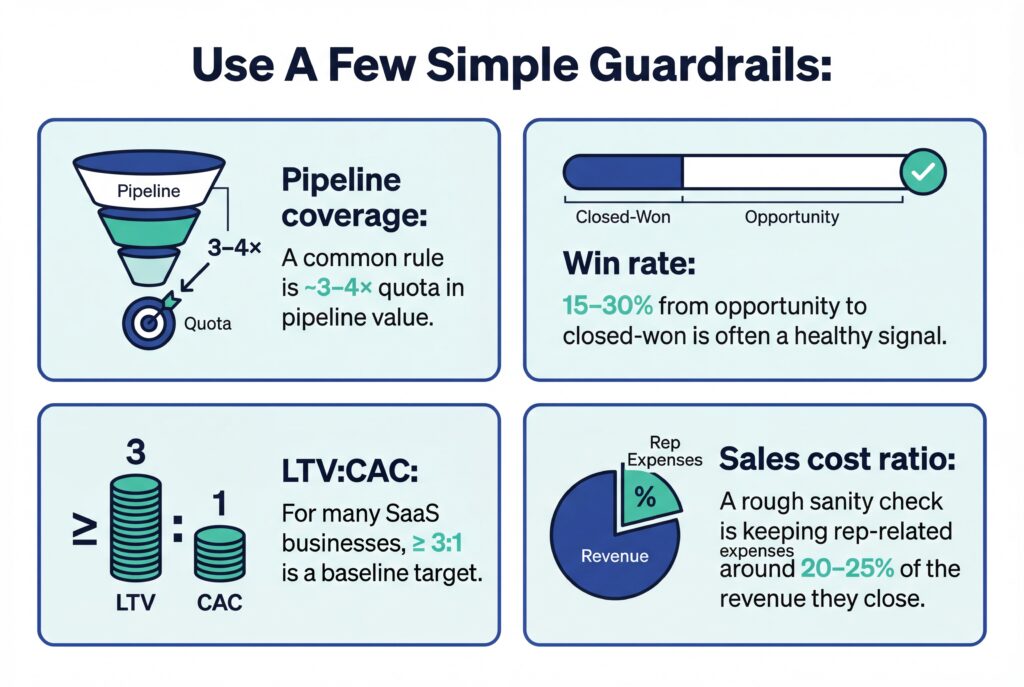
These aren’t universal constants. They’re friction detectors.
If the ratios are off, you’re not “behind.”
You’re learning something important: scaling headcount will magnify the problem.
Common “we’re ready” false positives
A few traps show up constantly:
- Big pipeline, low conversion. You’re generating motion, not revenue.
- A strong month with no trend. One good quarter can be luck.
- Hiring to fix messaging, PMF, or lead flow. Sales can’t manufacture demand out of thin air.
If you’re not sure, default to this: fix bottlenecks first.
Because systems scale better than people.
Choose The Right Sales Model Before You Add People
Scaling a sales team without choosing a clear model is how you end up with:
- inbound leads treated like outbound
- outbound reps waiting for marketing to save them
- enterprise deals run like SMB transactions
It’s not just inefficient. It creates internal conflict.
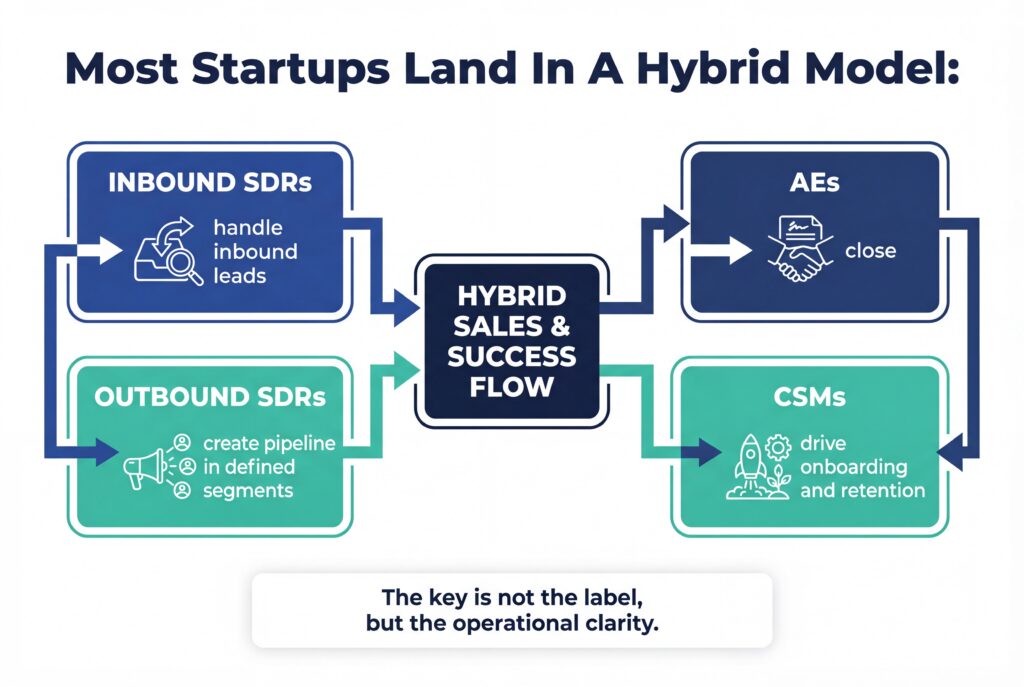
Inbound, outbound, ABM, or hybrid (how to choose)
There are patterns here:
- Inbound scales well when you already have demand and a simpler buying motion. Big TAM, high-volume product, shorter cycle.
- Outbound is required when demand is weak, you’re early in the category, your TAM is narrow, or deals are high-touch.
- ABM becomes necessary when ACV is high and the buying group is complex. Spray-and-pray breaks.
Segment strategy that prevents chaos later
Startups often try to sell to everyone. It’s understandable. It’s also costly.
Scaling sales gets easier when you commit to segmentation:
- By company size: SMB vs mid-market vs enterprise
- By vertical: one or two industries you can win in repeatedly
- By use case: where the pain is measurable and urgent
A hard rule worth keeping: don’t blend segments under one rep forever.
SMB speed and enterprise committee selling are different games.
If you force the same person to play both, you’ll get mediocre at both.
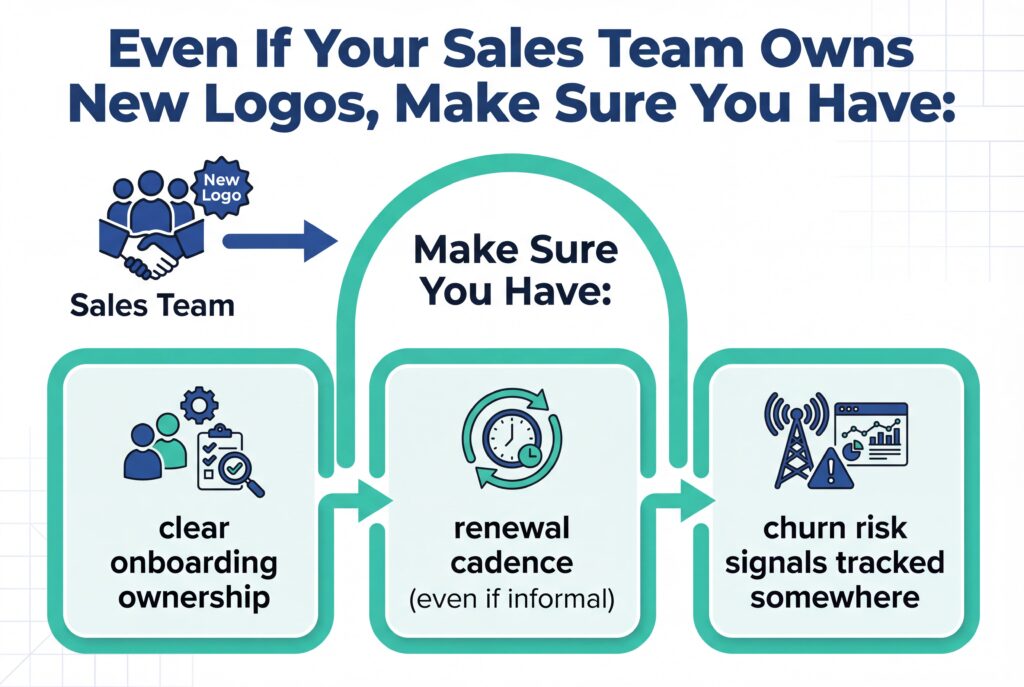
Expansion motion (don’t scale new logos while churn leaks)
Scaling a sales team is pointless if customers leave faster than you replace them.
Retention problems don’t stay in customer success.
They bleed into sales:
- future buyers ask for references and hear mixed stories
- word spreads in a tight market
- your reps start selling harder to compensate, which lowers deal quality
Early-stage startups often avoid hard retention conversations because it feels like a “later” problem.
It’s not later. It’s now.
Design A Structure That Scales Without Role Confusion
This is where scaling a sales team usually breaks.
Not because people aren’t talented.
Because nobody knows who owns what.
Start with pods (repeat what works)
A simple way to scale without reinventing everything is to build pods (a pod is a small, repeatable unit with clear roles).
A common early pod looks like:
- 1 SDR (pipeline creation and qualification)
- 2 AEs (discovery, demo, negotiation, close)
- Optional 1 CSM (onboarding, retention, expansion)
You can run one pod. Learn. Tighten the motion. Then replicate.
This is how you scale without turning sales into “add reps and pray.”
Generalists vs specialists (the timing matters)
Early on, full-cycle sellers are gold. They can prospect, qualify, demo, close, and figure things out. They don’t need a perfect machine.
But that breaks once volume rises.
A good question to ask is:
Is one person realistically able to handle the funnel without something dropping?
If your AE is spending hours researching, building decks, writing sequences, and doing admin, they’re not selling. They’re surviving.
That’s when specialization pays off:
- SDR/BDR owns top-of-funnel
- AE owns closing
- CSM owns retention and expansion
Territories & account ownership (stop overlap)
Overlap is a silent killer.
It creates turf wars, confusing handoffs, double outreach, and eventually, internal distrust.
Pick a clear ownership model:
- geography
- vertical
- account tier
Then enforce it in the CRM. And rebalance regularly. Quarterly is a good cadence.
One more rule: avoid splitting similar accounts across the same territory.
It’s a recipe for waste and burnout.
When to add management layers
Founders often delay hiring managers because it feels like overhead.
But management is infrastructure.
A practical threshold:
When one leader has more than 8–10 direct reports, you need frontline management.
Or when you’re building a second pod and coordination starts to crack.
The first manager is a pivotal hire. They need to coach, run deal reviews, enforce process, and keep morale steady.
Role clarity prevents redundancy
One phrase worth tattooing on your org chart:
Every lead should have one owner at a time.
Define funnel stages and handoffs explicitly:
- what counts as qualified
- when an SDR hands off
- what an AE must log before moving stages
- when CS takes ownership
Letting “everyone do everything” feels agile.
It scales like a brick.
Build The Execution System Before You Double Headcount
If you double headcount before you’ve built the system, you don’t get twice the revenue.
You get twice the noise.
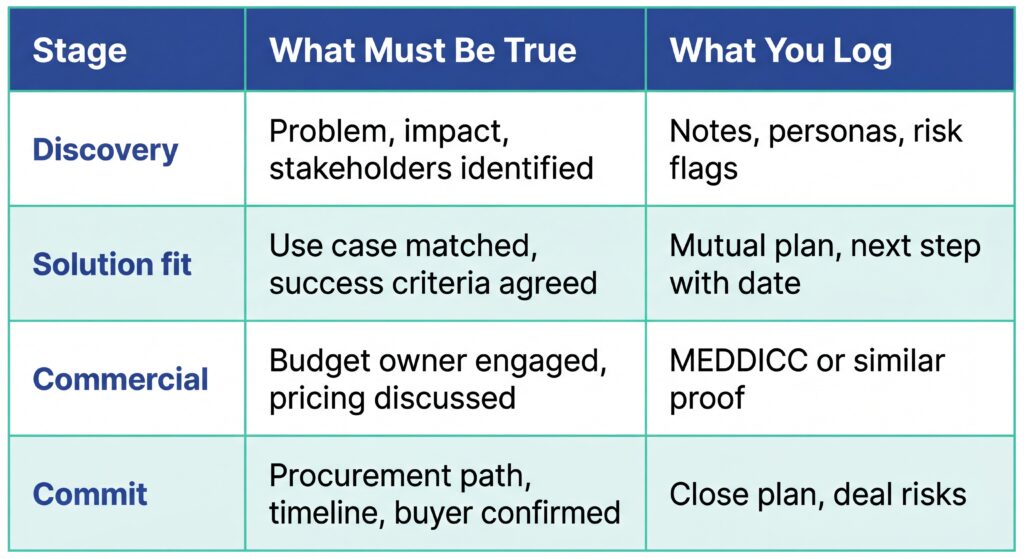
Document the sales process end-to-end
Not a slide deck.
An operational definition of how deals move:
- stage definitions
- exit criteria
- required fields and proof points
- qualification rules (what counts as real pipeline)
Why this matters:
Top sales orgs are far more likely to have thorough sales processes than low performers. That gap shows up when you scale.
A simple example of stage discipline:
Messaging that scales without turning generic
The fastest way to kill win rate during scaling is letting every rep invent their own pitch.
You need a shared narrative:
- what problem you solve
- why it matters now
- what makes you different
- what proof you have
Then define where personalization lives:
- industry examples
- role-specific pains
- stage-specific objections
Quarterly refresh is a strong habit.
If you don’t update messaging, reps fill the gap with whatever they think works.
That’s how you drift into discounting and feature dumps.
Enablement library: what every rep needs to win
Enablement is giving reps the right content, at the right moment, with clear guidance.
A bare-minimum library for scaling looks like:
- playbook and stage guidance
- discovery questions by persona
- objection talk tracks
- competitive battlecards
- pricing and packaging guardrails
- case studies (short, specific, believable)
- email and call templates
Organize by buyer persona and deal stage.
If a rep has to hunt through folders, they won’t use it.
Coaching & reinforcement loops
Training doesn’t scale.
Reinforcement scales.
The difference is what happens after onboarding.
A strong cadence includes:
- weekly 1:1s that coach behaviors, not just numbers
- call reviews focused on discovery quality, not “nice call” feedback
- deal reviews that surface risk early
- roleplays when the team is facing a new objection trend
If you’re a CEO, here’s a simple truth:
Managers create your sales outcomes.
Reps execute plays. Managers enforce and improve them.
Tech stack by stage (tools that remove bottlenecks)
Tools are not strategy.
But the wrong stack makes scaling painful.
A simple progression:
- Under 5 reps: CRM + basic communication (Slack, Zoom). Keep it clean.
- 10–20 reps: sales engagement (cadences), Sales Navigator, call recording.
- 50+ reps: forecasting discipline tools, analytics, CPQ/contract automation, enablement platforms.
The goal is reducing admin and increasing signal, because systems scale better than people.
Metrics That Tell You If Scaling Is Working
You can’t manage scaling sales off vibes.
You need a small set of metrics that tell you what’s happening before the quarter ends.
The scaling dashboard (weekly)
Track the full funnel, not just revenue.
- pipeline coverage
- stage conversion rates
- win rate
- average deal size
- sales cycle length
- lead response time
- churn and renewal risk signals
This gives you leverage. You can fix problems while they’re still upstream.
Quotas that evolve with specialization
Early quotas are often informal.
Then you split roles and quotas must follow.
- SDRs: meetings or SQLs (and quality checks)
- AEs: new ARR
- CSMs: renewal and expansion
A practical design target:
Set quotas so most reps land in an 80–120% attainment band when the system is healthy.
Forecasting that doesn’t lie
Forecasting is often treated like a finance ritual.
It’s a coaching tool.
Start with weighted pipeline based on historical stage win rates.
Then improve with reality checks:
- is the budget owner engaged
- is the business problem defined in the buyer’s words
- is there a mutual next step with a date
Run weekly forecast reviews. Compare commit to actual. Track slippage.
If a rep’s commit consistently slips, don’t punish them. Diagnose what’s missing.
Detect underperformance early
Underperformance shows up in patterns:
- low pipeline coverage
- weak stage conversion
- deals stalling in the same stage
- heavy discounting to “save” deals
If you wait for end-of-quarter results, you’re too late.
Coach based on funnel inputs and behaviors.
Compensation design that scales with roles
Comp plans should change when roles or pricing changes.
Early on, one plan is fine. As you specialize, align pay to behavior:
- SDR bonus per qualified meeting or SQL
- AE commission on new ARR
- CSM incentives on retention and upsell
Keep it simple.
Complex plans create gaming. Simple plans create focus.
Hiring Strategy For Each Stage Of Scaling
Your first sales hires will shape your company.
Not because they close a few deals.
Because they set the standard for how selling gets done.
The profiles you need first
Early stage: hire versatile closers with startup grit.
People who can:
- sell consultatively
- figure out the product story
- handle ambiguity
- build pipeline without whining
A blunt rule from the field: don’t hire reps you wouldn’t buy from.
If you wouldn’t trust them with your own money, don’t put them in front of customers.
How criteria changes as you grow
The first 5 hires need to be adaptable builders.
The next 15–20 can be more role-specific.
At that stage, you’re hiring into a system. You’re not asking them to invent it.
Still, don’t over-index on logos.
Coachability and operating discipline outperform fancy resumes in a scaling startup.
A structured interview process with scorecards
Interviews should predict performance.
Structure helps:
- Screen for fundamentals (communication, drive, learning speed)
- Behavioral interview with a rubric (coachability, resilience, operating cadence)
- Simulation
- mock discovery
- mock outbound sequence
- short pitch exercise
- Reference checks focused on deal behavior
Use scorecards.
When hiring gets fast, gut hiring becomes a liability.
Onboarding & ramp as a scaling lever
Onboarding is where your system becomes real.
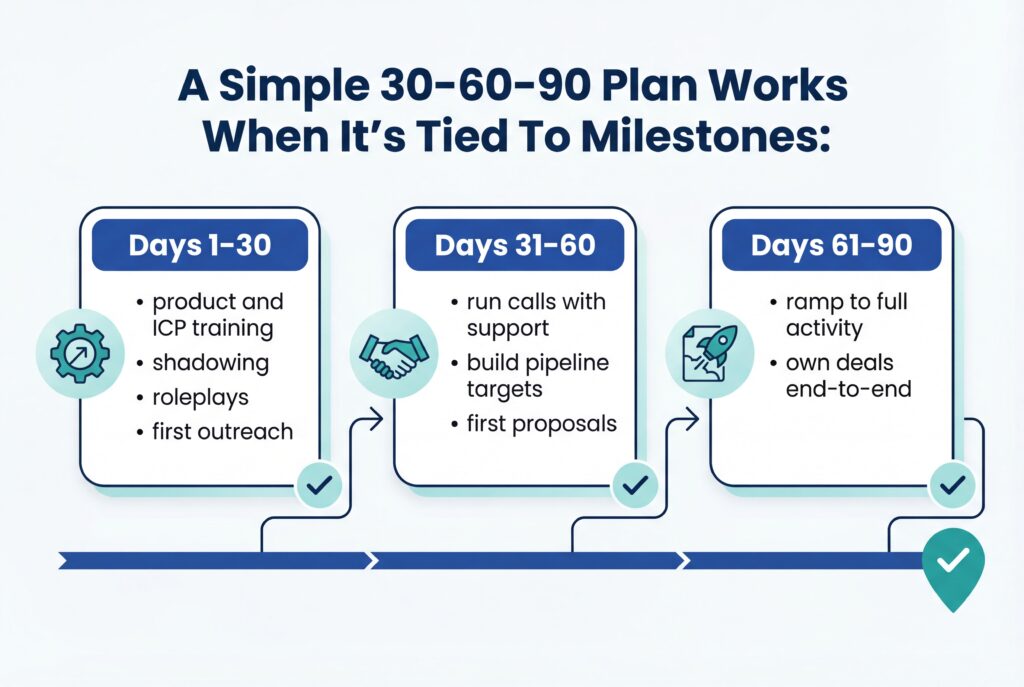
Measure ramp with milestones:
- first meeting booked
- first qualified opportunity
- first proposal
- first close
Quizzes and certification aren’t “corporate.”
They reduce variance.
Avoiding over-hiring
Hiring out of panic is the most expensive scaling mistake.
Treat hiring as a last lever.
Before adding headcount, ask:
- can we remove admin work
- can we tighten qualification
- can we fix conversion
If you do hire, hire in pods or small batches.
And set clear trigger criteria. Pipeline coverage, not optimism.
Advanced Scaling Moves (Only After The Core Engine Works)
This is where CEOs get tempted.
New markets. Enterprise. Channels. International.
All valid. All dangerous if your core motion is shaky.
Expanding into new verticals or markets
Expand when:
- your current segment is slowing
- you can articulate why you win (not just that you do)
- you have a playbook you can test in a new segment
Run a pilot.
A small dedicated pod. Clear success criteria. Tight feedback loops.
Don’t “announce expansion” and hope.
Enterprise vs SMB motion
Enterprise scaling is not SMB scaling with bigger numbers.
Enterprise means:
- longer cycles
- more stakeholders
- more proof required
- more internal support (SEs, deal desk, legal)
If you want enterprise revenue, build an enterprise motion.
Otherwise you’ll just lengthen cycles and drain your team.
Partnerships & channel as a multiplier
Partners can multiply reach.
They can also multiply confusion.
Only go channel when:
- your product can be sold through others
- you can support enablement for partners
- you have deal registration rules to prevent conflict
Hire a dedicated channel owner.
If channel is “everyone’s job,” it becomes nobody’s job.
International expansion
Going global is a stage (not a flex).
Consider readiness:
- support capacity
- billing and compliance
- localization needs
- sales leadership bandwidth
Start remote in one market. Learn. Then build local presence.
The Step-by-Step Scaling Roadmap
Here’s a practical sequence that avoids the common traps.
Phase roadmap
Phase 1: Validate repeatability
- founder-led or small-team selling
- clear ICP and messaging
- baseline metrics and retention proof
Phase 2: Codify and build the first pod
- documented stages and exit criteria
- basic CRM hygiene
- first SDR + AEs, plus onboarding ownership
Phase 3: Replicate pods and add management
- second pod
- first frontline manager at 8–10 reps
- consistent deal review cadence
Phase 4: Specialize by segment and tighten forecasting
- split SMB vs enterprise or inbound vs outbound
- role-specific quotas and comp
- stronger forecasting and leading indicators
Phase 5: Expand deliberately
- new markets, enterprise, partners, international
- pilots first, then scale
The first 90 days when you start scaling
If you’re about to scale headcount, treat the first 90 days like a systems sprint.
- Weeks 1–4: Lock ICP, stage definitions, and onboarding plan. Start pipeline building.
- Weeks 5–8: Run deal reviews weekly. Iterate messaging based on real calls.
- Weeks 9–12: Measure conversion and pipeline coverage. Decide what to replicate next.
You’re not trying to “grow fast” in 90 days.
You’re trying to build a machine that can grow fast.
What a healthy scaled org looks like
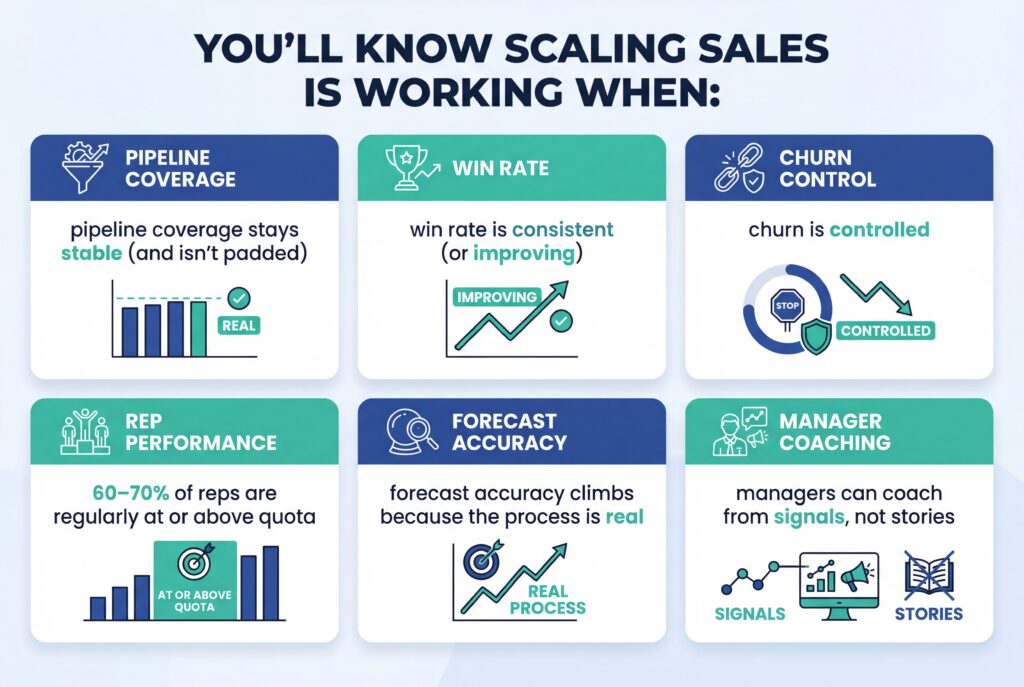
That’s the outcome:
Not a big team. A repeatable system.
How EnableU Helps When Scaling Sales
As sales teams move from early traction to repeatable growth, the hardest problems become systemic rather than tactical.
EnableU supports this stage by helping leadership see how the sales system is holding up as headcount increases.
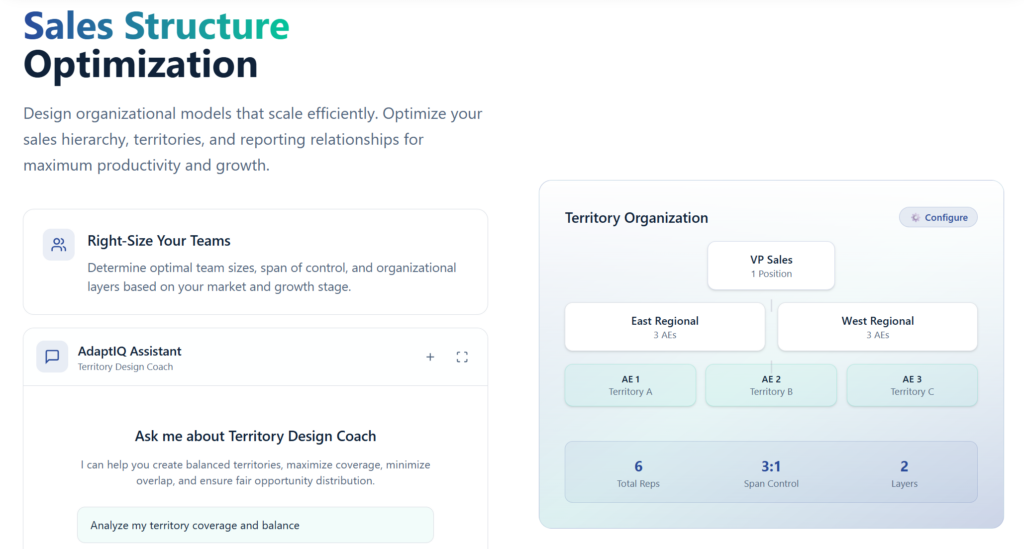
EnableU helps teams:
- Define and adapt GTM strategy as the sales org grows
- Monitor pipeline health, deal quality, and leading indicators at scale
- Design sales structure, territories, and span of control that remain balanced
- Identify skill gaps tied to role, segment, and deal complexity
- Align quotas, capacity, and incentives with real execution constraints
- Maintain consistency as pods, managers, and regions multiply
👉 See how EnableU supports system-level sales scaling. Book a free demo.
Frequently Asked Questions
How long does it typically take to scale a sales team successfully?
Scaling a sales team is usually a 6–18 month process, not a quarter-long sprint. The timeline depends on how repeatable your sales motion is before hiring and how quickly new reps reach full productivity. Teams that scale systems first ramp faster and stall less.
What’s the biggest difference between scaling sales at a startup vs a later-stage company?
Startups scale sales while the system is still forming, not after it’s mature. That means roles, messaging, and processes are evolving in parallel with hiring. Later-stage companies scale within established constraints. Startups must balance speed with discipline or risk compounding chaos.
Can you scale a sales team without hiring aggressively?
Yes, and many teams should. Scaling sales often starts by increasing output per rep, not adding headcount. Better qualification, tighter process, clearer messaging, and stronger enablement can unlock growth before hiring a single new salesperson.
When does scaling a sales team start to hurt culture?
Culture usually breaks when hiring outpaces onboarding, management, and clarity. If new reps don’t know how success works here, they invent their own rules. Scaling sales sustainably requires making expectations, behaviors, and standards explicit before volume increases.
Conclusion
Scaling a sales team forces every hidden assumption into the open. What worked with five reps starts to strain at fifteen. Pipeline quality drifts. Structure blurs. Forecasts become harder to trust.
The teams that scale well treat growth as a series of deliberate system decisions. They validate demand, choose a sales model that fits their buyers, design structure before adding headcount, and use leading indicators to correct course early.
That discipline is what separates momentum from chaos when learning how to scale a sales team.
To see how this kind of system holds up in practice, start a free trial of EnableU’s Sales Excellence framework and explore how its eight pillars help leaders design, inspect, and adjust their sales organization as it scales.